
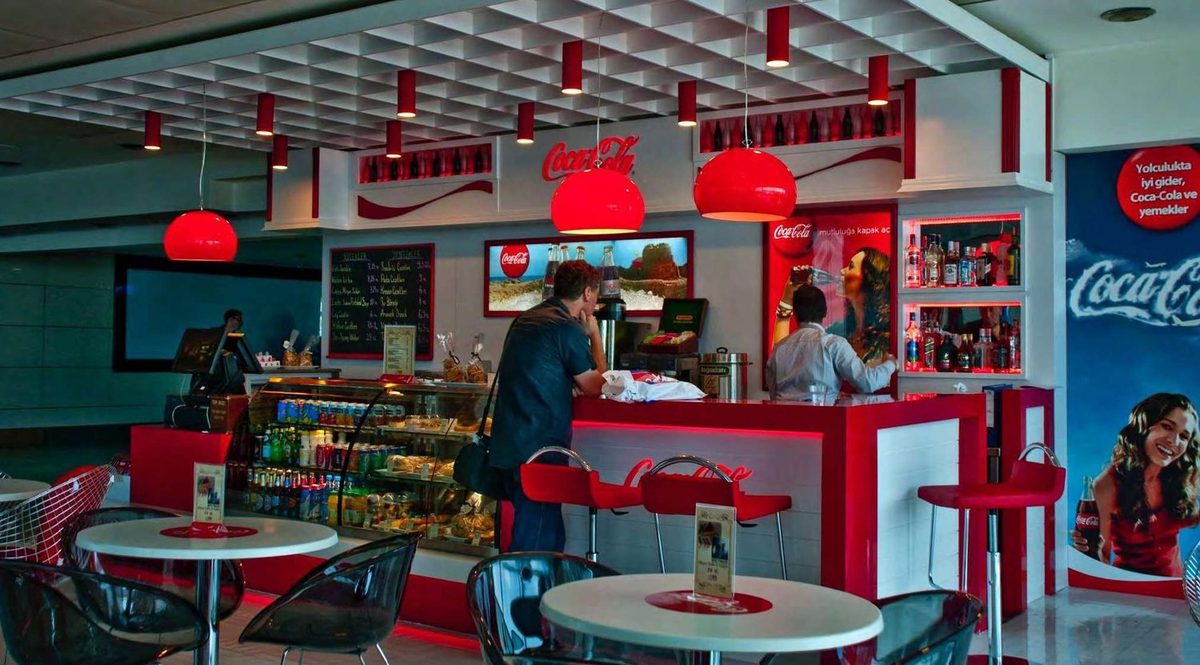
Turning brand intent into space
Spatial brand experience turns brand character into a physical encounter that visitors can see, use and move through. The starting point is not logo size. It is what the brand needs to communicate and what visitors are expected to do. Exploring a product, discovering a collection, speaking with a team or attending an event creates different spatial needs. Without those goals, colour, form and material choices can remain decoration. The team first prioritises the message, then decides how each priority should appear across the space.
From first glance to closer contact
Visitors read a space from a distance before they see its details. Silhouette, light, colour and one clear message create the first impression. As they approach, entrances, product displays, graphics and meeting areas become visible. Not every point needs the same density of information. A legible idea outside can lead to more detailed product information inside and a quieter place to talk. Open sightlines and clear circulation let people explore at their own pace. Wayfinding should help visitors understand where they are without forcing everyone along one route.
Materials and sensory cues
Materials affect more than appearance. They shape texture, sound, light reflection and whether a space feels warm, calm or technical. Material choices should express the brand while meeting practical needs such as durability, cleaning, production and reuse. Because lighting changes how a sample looks, materials should be reviewed under conditions close to the final environment. Sound level, temperature, screen glare and seating comfort also influence how people experience the space. These sensory decisions work together, so they should be reviewed as one visitor experience rather than separate decorative details.
Consistency across touchpoints
A brand environment may appear as a trade-fair stand, showroom or temporary event space. Repeating the same decoration in every setting is rarely the answer. A coherent design language can be maintained through clear hierarchy, recognisable materials, consistent messaging and a shared service tone, while each space serves its own purpose. Teams decide which elements are essential at a smaller scale and what new interactions become possible in a larger one. Visitors can then recognise the brand across different locations without every space feeling like a copy of another.
A verified project example
Nothing 2A’s 2024 Türkiye launch took place at DasDas. The confirmed scope included the design of the stage, entrance, foyer and after-party spaces, with turnkey delivery from concept design through production and on-site installation. Those spaces served different moments within one launch, so their function and place in the visitor journey were considered separately. The example shows how a spatial brand experience can connect multiple event moments rather than rely on a single photo backdrop. See the Nothing 2A project page for the verified project scope.
Designing for implementation
For the intended experience to survive installation, concept, technical development, production and build need to inform one another. Dimensions, transport constraints, lighting infrastructure, screens and power are resolved alongside the design. Drawings, material samples and production details help different teams build the same solution. Explore retail and showroom design or event architecture, and browse the project selection for examples across different scales.
Accessible and adaptable space
Experience design also considers how visitors with different bodies and mobility needs can use the space. Circulation widths, seating options, distance to products and readable signs should be reviewed early. If an event space changes programme during the day, furniture, screens and service points need to adapt without blocking movement. A brand idea then becomes more than a visual language: it becomes a physical experience that visitors can use with ease.